
Is basic economy worth it if I need to check a bag?
Why the cheapest fare is rarely the cheapest trip, which services are stripped out, how bags and seats add up, what changes during a disruption and when a basic fare is exactly right.

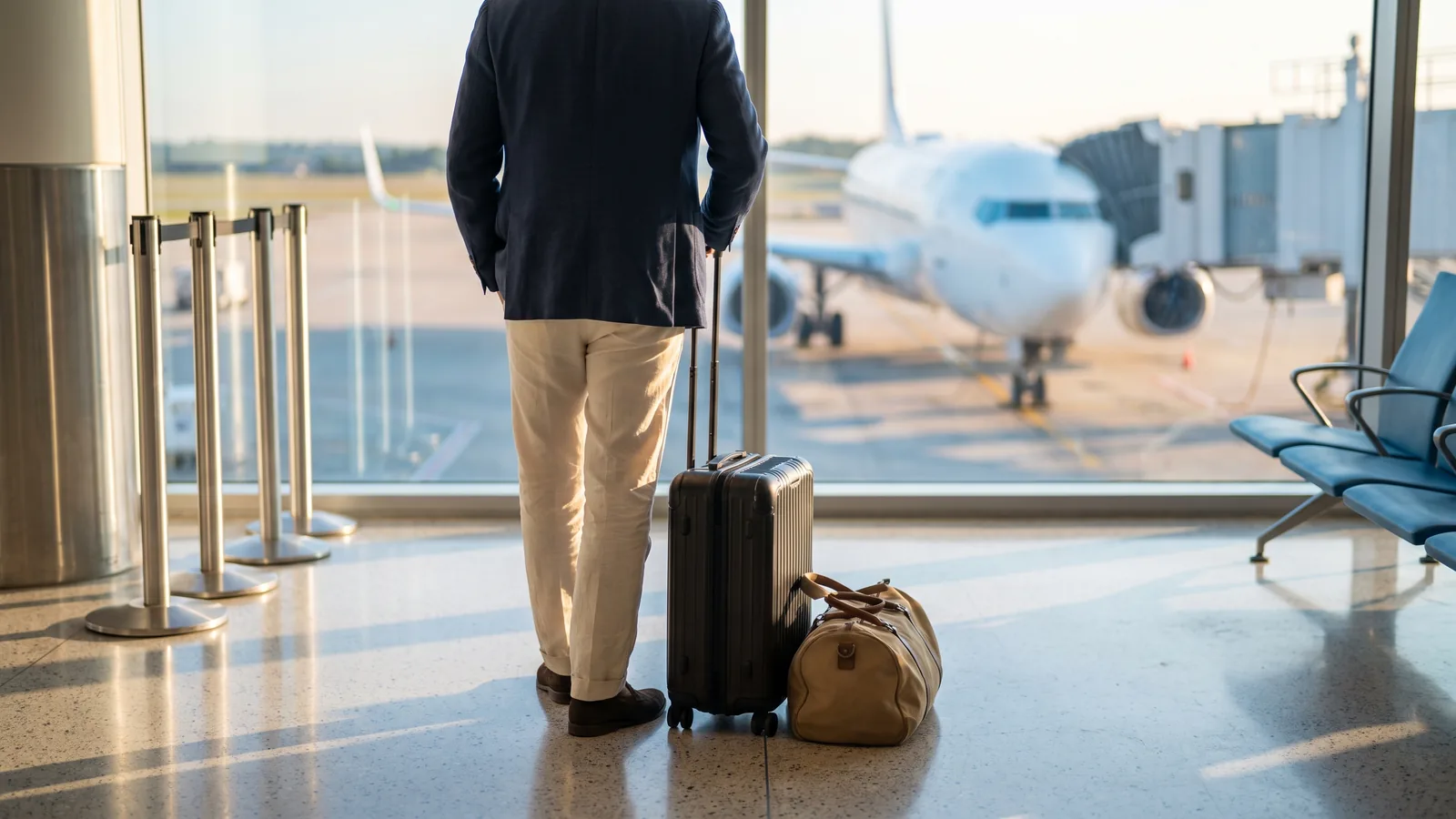 Illustrative image, AI-generated
At a glance#
| Item | Basic fare | Next fare up |
|---|---|---|
| Carriage | identical | identical |
| Checked bag | not included | usually included |
| Seat selection | for a fee | included or cheaper |
| Changes | excluded | possible for a fee |
| Boarding | last | earlier |
| Elite credit | reduced | full |
Why the cheapest fare is rarely the cheapest trip#
No fare is booked as often and understood as rarely as the lowest one in the list. It looks like the same flight for less money, and it stays that way only as long as nothing is needed that was stripped out of it.
Basic fares are an answer to price comparison. They produce a low number in a search, and everything that would raise that number is unbundled and sold separately. The same seat is effectively sold at two prices, a low headline figure for the comparison and a fuller one for the traveller who adds back what the trip needs. The carriage itself is unchanged: same aircraft, same legroom, same crew.
The whole difference sits in the extras. A traveller needing none of them flies at the lowest price; one needing any of them buys it separately and usually pays more. The only sensible comparison is therefore the fare plus the services the trip requires, and in most search interfaces those services appear only after the fare has been chosen, so the decision is made on incomplete information.
Names do not help. Basic, Light, Economy Basic and similar labels share a principle and differ considerably in scope; what one airline still includes, the next has removed. Some carriers price the basic fare as a small discount on the regular one, others as a large one, so the same word describes two very different offers depending on where it appears.
What is stripped out#
Baggage#
Three things are missing from nearly every basic fare: the checked bag, seat selection and any form of flexibility. All three can be bought back, and all three cost more separately than in a bundle.
The checked bag is the largest item and the most common reason the arithmetic flips. It is charged per direction, not per trip, and a second bag costs extra on almost every fare and usually more than the first. Adding a bag later is usually possible at the price of the day, but counter prices are higher than at booking, and gate prices are the highest of all.
The carry-on is the murkier question. Some basic fares allow only a personal item under the seat in front, others a full carry-on with space in the bin, and the distinction sits in the fare description and nowhere else. That one line is worth reading before every booking, as reading fare rules describes.
On connecting itineraries the bag is charged once as long as it is through-checked. On separate tickets it is charged per ticket, and the apparent saving can disappear completely, as separate tickets describes.
Seating#
A seat is always assigned, but late and without regard for who is travelling together. The seat itself is guaranteed; what the fare removes is the choice, and the assignment usually arrives only at check-in, when the cabin has largely filled. Sitting together costs extra. For two people that fee doubles, and for a family it multiplies, which on short routes alone frequently consumes the saving, as seat selection fees describes.
On long-haul the whole construction bites harder, because a bag is nearly always needed and the seat matters more over many hours. Ten hours in a middle seat is a different flight from ten hours at a window.
Children are a special case. Airlines are expected to seat young children next to an accompanying adult, and that usually happens at check-in. Relying on it means relying on an assignment, with no commitment behind it.
Flexibility#
Changes and refunds are excluded on basic fares. Not travelling forfeits the fare and returns only the flight-dependent taxes. Name changes are frequently excluded as well, so a typo in a name becomes an expensive problem. Without a change option only trip cancellation coverage remains for illness, and its premium belongs in the arithmetic as soon as the date is not certain.
Boarding position is the quiet consequence. Boarding last often means no bin space, because on a full flight the bins are gone by the time the last group reaches the door. The carry-on is gate-checked and is no longer immediately available on arrival.
Statutory and contractual rights on cancellation do not depend on the fare. They apply to a basic fare as fully as to the most expensive ticket, and a counter agent who says otherwise is confusing fare rules with entitlements, as flight cancelled, what now describes. Where the fare does make a difference is the order of rebooking: alternatives are allocated within whatever is available, and a basic fare sits at the back of that queue.
Elite members lose something else. Many programmes suspend individual benefits on basic fares, the free bag or the preferred seat among them, and elite-qualifying credit is reduced. Miles are usually still earned, at a lower rate. Status earned for those very benefits partly evaporates, as when status gets you nothing describes.
Worked example: one week for two#
Two people fly for a week and need one bag each plus two seats together.
| Item | Basic fare | Next fare up |
|---|---|---|
| Base price, two people | low | higher |
| Bags out and back | four separate fees | included |
| Seats together | four fees | included or cheaper |
| Change option | none | available for a fee |
| Boarding | last | regular |
| Result | frequently more expensive | frequently cheaper |
Read down the basic column and the low base price is the only line in its favour. Every other line either adds a fee or removes an option, and on this trip every one of those lines is needed.
The bags tip the balance. Four bag fees are four separate amounts, and they rarely enter the price comparison at all.
Seating is what decides it for families. An assignment made without regard for the booking separates parents and children routinely, and solving it at the gate is uncertain and costs time.
The change option is almost never priced in, yet during a disruption it becomes the most expensive item: postponing the trip forfeits the entire basic fare, which exceeds any bag fee. The reduced elite credit is the one loss that cannot be bought back, and for a traveller working towards a qualification it outweighs the price difference.
As soon as a bag and a seat are needed, the higher fare is regularly the cheaper choice. Strip the table down to what a carry-on-only trip needs and only the base price is left, and then the basic fare wins comfortably.
When a basic fare is the right product#
A basic fare fits well in the following situations:
- Short trips with a carry-on. Two nights, one bag, no seating preference.
- Fixed dates with no risk of change. Where the trip is certain, flexibility has no value.
- Solo travel. Who sits in the next seat does not matter.
- High-frequency routes. With several flights a day a disruption is easier to absorb.
- Business trips under a tight expense policy. Where the employer reimburses neither bags nor seats, the basic fare is the clean answer and the trip happens with a carry-on.
- Very short routes with rail competition. The basic fare is often the only reason to fly at all, although the comparison with the train looks entirely different once bags and seats come in.
In those cases the basic fare is no compromise. It sells what is needed and nothing more.
Travelling deliberately with a carry-on also buys time: no wait at the belt, no risk of a delayed bag, a faster exit from the terminal. None of that appears in a price comparison.
When it is not worth taking the basic fare#
The basic fare is the wrong choice in these cases:
- When a bag is checked. The separate fees almost always exceed the fare difference.
- Travelling as a pair or with children. Seat fees multiply.
- With uncertain dates. Without a change option the entire fare is at risk.
- On tight connections. During a disruption the basic fare is rebooked last, as missing a connection describes.
- On long-haul with a connection. Bags, seating and boarding add up to a noticeable difference in how the trip feels.
Award bookings in basic fare classes are a trap of their own. Some programmes mirror basic fares in award pricing, so the same restrictions apply while the points are spent anyway, and the extras still cost cash, as points plus cash describes for the related calculation. Where a programme lets bags or seats be paid with points, the arithmetic shifts again.
What distorts the search#
Price comparisons default to the lowest fare, and two offers showing the same number can differ completely in what they include. Many comparison sites now allow a bag to be set as a filter, and using it changes the ranking immediately. A filtered search also reveals which airline’s basic fare is a small discount and which a large one, the difference the fare names hide.
Booking directly with the airline shows the fare tiers side by side, the fastest way to see the difference, as direct vs OTA describes.
The surcharge for the next fare up is not the same everywhere. It differs by route, by day and by load, which is why no general rule says when the higher fare pays. Regulars on one route know it by heart after two bookings, and from then on the choice is a habit.
The total shown in the final step misleads as well. Bags and seats are offered there as recommendations, and clicking them away restores the low price without changing what the trip needs.
Two lines written down before searching settle most of it: how many bags, and whether a specific seat is needed. With those answers the fare choice takes ten seconds. Extras are cheapest at booking, dearer afterwards and dearest at the airport, so a bag that is certain to come gets booked straight away.
The most common mistakes#
- Comparing the price in the search. The number that counts is the fare plus the extras the trip needs.
- Assuming a carry-on is included. Only the fare description says so, and it varies widely.
- Adding a bag at the airport. At booking the same bag costs less.
- Planning a trip for two without seat fees. Random assignment separates travellers routinely.
- Booking with uncertain dates. A fare that allows changes is cheaper than losing the whole ticket.
- Booking tight connections. Basic fares are rebooked last when something goes wrong.
Related topics#
Frequently asked questions
What is missing from a basic fare?
Is a carry-on included?
Do I get a seat?
Can I change the flight?
Do miles and status still count?
What happens on a cancellation?
Is the next fare up worth it?
Does this apply on long-haul?
Can I add a bag later?
What about boarding?
Does it apply to award tickets?
When is a basic fare the right choice?
Which flights are really in your spending?
In a free strategy call, we translate your spending into your actual routes and travel dates. Want to see the number first? The calculator shows it in about 30 seconds.
30 minutes · online · no obligation
What we'll cover in the call
- Which airline programs fit our routes?
- How many flights are realistic for our spending?
- What do taxes and fees cost on award flights?