
What should I do first about a fraudulent card charge?
Why reporting matters more than freezing, how unauthorised charges differ from merchant disputes, what changes while travelling, which records count and when disputing is not worth it.

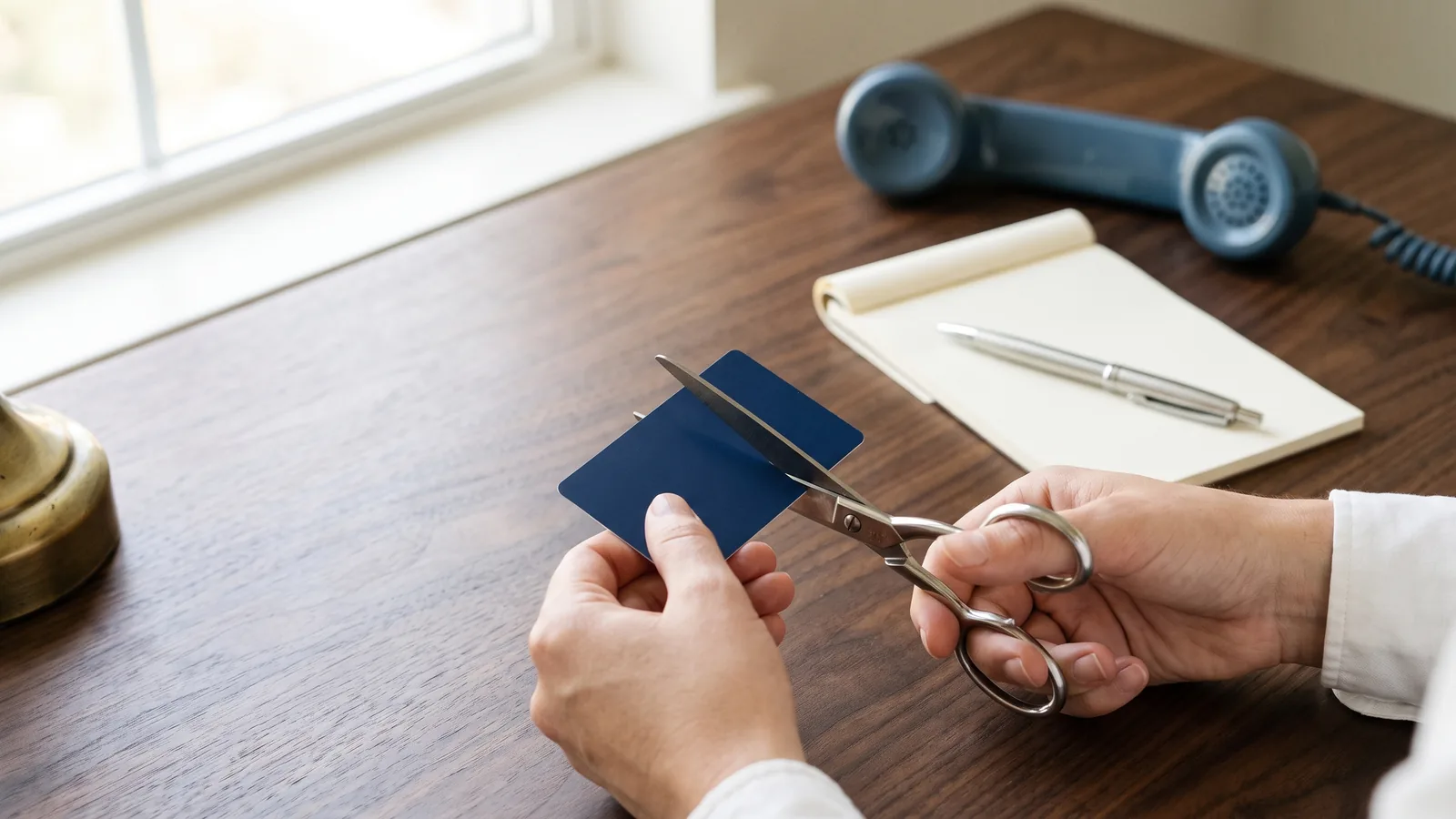 Illustrative image, AI-generated
At a glance#
| Case | Who handles it | Procedure |
|---|---|---|
| Charge you did not make | the issuer | block and refund |
| Goods not delivered | merchant, then issuer | chargeback |
| Subscription renewed unwanted | provider, then issuer | dispute |
| Duplicate charge | merchant | correction |
| Unfamiliar merchant name | check first | usually legitimate |
| Lost card | the issuer | block |
Why reporting matters more than freezing#
Hardly any process around credit cards is as well regulated and as poorly known. Liability is limited, the procedure is fixed, and the step that counts takes five minutes.
Freezing a card stops further charges, and that matters. Reporting to the issuer does more: it records the point from which the cardholder is responsible for nothing. Report first, then work out which charges are affected. A block limits the damage going forward, and the charges already made are dealt with in the review. With a prompt report the loss almost never lands on the cardholder.
A card that has merely been mislaid is the exception. Most apps offer a temporary freeze that stops new charges and can be reversed the moment the card turns up, which spares the new number a full block would bring.
An unauthorised charge and a dispute with a merchant look identical on a statement and follow completely different procedures. Confusing them wastes time, because a fraud report for a merchant dispute produces a new card number without solving the problem, as chargeback describes.
The burden of proof favours the cardholder. Nobody has to prove a charge was not theirs; the issuer has to show the card was used properly, and that allocation is the real protection.
The first hours#
Reporting#
The first hours come down to reporting, documenting and, on larger amounts, filing a police report, and all of it fits into one evening. The emergency number is on the back of the card and in the app. It is staffed around the clock and works worldwide.
During the call the affected charges are described in outline. A complete list is not needed, because it goes in writing later anyway. The case reference is the anchor for every later enquiry. Speed matters beyond the block itself: the longer a report waits, the more likely a conversation about shared responsibility becomes, and a report on the day of discovery leaves no room for one.
Whether the card is still in your possession gets recorded too. A card in a pocket with unfamiliar charges points to skimmed data, a missing card to theft, and the distinction shapes the review.
Documenting#
A screenshot of the transaction list with the date costs ten seconds and is later the only evidence of what was visible and when. The time of the report belongs next to it, as the counterpart to the case reference. On larger amounts issuers frequently ask for a police report; it can be filed online and speeds up handling.
No explanation of why a charge cannot be yours is required. The report states that it was not authorised, and the review is the issuer’s job.
Worked example: one amount, several cases#
A statement shows an amount the cardholder cannot place. Working down the table in order saves most of the effort. The search for the merchant name comes first because it settles the largest group, a look at your own subscriptions and orders comes second, and only what remains after both is a case for the issuer, which then deserves no delay at all.
| Case | The right route | Outcome |
|---|---|---|
| Unfamiliar merchant name, legitimate charge | search the name | no case needed |
| A subscription you signed up for | cancel with the provider | chargeback only on a breach |
| Paid for, not delivered | merchant, then chargeback | refund through the process |
| Charge you did not make | report to the issuer | block and refund |
| Card lost, no charges yet | report to the issuer | block, no refund needed |
| PIN written down and lost | report to the issuer | liability may remain |
Unfamiliar merchant names are more common than all the other cases together. Names on statements differ from shop names, and a short search settles most of them. Foreign charges in another currency look strange too and are frequently legitimate, for instance from bookings through international portals, as merchant category codes describes.
Forgotten subscriptions are the case most often misfiled. A subscription signed up for and forgotten is no fraud, and reporting it as such produces a new card number while the subscription carries on. An unwanted renewal goes to the provider first, and only a provider who ignores a cancellation turns it into a dispute for the issuer.
Goods paid for and never delivered are the most common genuine dispute. They belong to the chargeback process, outside the fraud process, and the difference decides the handling time.
The charge you did not make is the fraud case proper and the simplest to handle. Report, block, refund, and the process runs without further input.
A lost card with no charges is easily overlooked. It still needs a report, otherwise the timing becomes a matter of argument later.
Only in the last case can the cardholder end up paying. Gross negligence is a narrow concept, and the examples have been the same for years: the PIN kept with the card, details handed over on request, an obvious warning ignored. Anything short of that stays with the issuer.
What changes while travelling#
A blocked card abroad is a bigger problem than at home, because without a second card the ability to pay ends with the block. The report itself works as it does at home, through the number on the back of the card, which is reachable from anywhere. A second card from a different issuer, kept separately, belongs on every trip for that reason alone.
A replacement card can often be couriered abroad. That takes days and requires a deliverable address, and the new card and its PIN arrive separately, which matters because a card without a PIN does not work at a machine. Cash on a card is the most expensive fallback and impossible on a blocked card anyway, as cash abroad describes.
Families need to check the additional cards before relying on them as the backup. In many programmes blocking the main card blocks the additional ones too, and that hits everyone travelling at once.
How to notice fraud early#
Instant notifications on every transaction are the single most effective measure. They show an unauthorised charge at the moment it happens and can be switched on in almost any app. They help in the other direction too, because a legitimate charge recognised as it arrives never turns into an unfamiliar line on the statement weeks later.
Reading the statement line by line each month finds the small amounts that otherwise pass unnoticed. Small recurring amounts over months are the classic pattern: individually invisible, together significant, and typically from one leaked record. Reviewing twelve months once a year finds them.
Virtual card numbers limit exposure to one merchant and can be cancelled individually without touching the main card. Using one card exclusively for subscriptions makes any deviation there obvious immediately. Card details saved in browsers and apps are spread across many places, and each is a potential leak. Limiting them deliberately to a few places lowers the risk more than any later vigilance.
Cards left unused get checked less often and are a favoured target for that reason. A card kept only for emergencies still deserves a regular look at its statement.
Frequent travellers add a travel notice. It stops legitimate foreign charges being flagged and declined, and most apps set it in two steps.
When it is not worth disputing#
The process costs more than it returns in these cases:
- Tiny amounts of unknown origin. Frequently they are merchant pre-authorisations that disappear.
- Subscriptions you signed up for. They are cancelled with the provider, not charged back.
- Disputes about quality. That is a matter for the provider.
- When the card is being replaced anyway. The block is the process, and a separate dispute adds nothing.
- Duplicate charges in retail. They usually resolve within days as a hold expires.
Charges arriving after the block are no sign that it failed. Holds placed before it continue to settle. Payments through stored wallets carry the same card number and are treated identically, so blocking the card blocks them too.
What happens after the report#
The issuer blocks the card and issues a new one with a different number. Every stored payment has to be updated afterwards, which is the most tedious part of the whole exercise. As a rule the replacement number has to be accepted; the old one does not come back after a fraud report. Subscriptions, insurance and recurring bookings otherwise fail silently, and the first failed collection frequently surfaces only as a dunning letter. Collecting the stored payment details before the new card arrives saves that, as authorized users describes for the related administration. On joint accounts both holders receive new numbers, and the work doubles.
The disputed charges are reviewed. Charges made before the block are generally refunded, and on larger amounts a provisional credit is frequently issued quickly, then confirmed or reversed once the review closes. If it is reversed, a reason is given. That reason is the starting point for an appeal, and often only one piece of evidence is missing.
A written statement is usually required. It lists the charges, states that they were not authorised and quotes the case reference. Handling takes days to weeks. If nothing has arrived after the stated period, a written follow-up quoting the case moves it along.
Larger cases deserve one file: date of the report, case reference, list of charges, police reference and every reply from the issuer. Such cases sometimes run for weeks, and one person on a phone line rarely knows the whole history.
Other cards need a look as well. Compromised data frequently comes from a breach at one merchant, and several cards belonging to the same person are often affected. Anybody holding an additional card on the account should hear about the block before they find out at a till.
The most common mistakes#
- Calling the merchant first. Unauthorised charges go to the issuer; the merchant is the right address only in a dispute about goods.
- Not noting the case reference. Every later enquiry hangs on it.
- Travelling without a second card. One from another issuer, kept apart from the first, keeps a block from ending the trip.
- Reporting unfamiliar names immediately. A quick search comes first, and most turn out to be legitimate.
- Reporting subscriptions as fraud. Cancelling is the route; a fraud report only buys a new card number.
- Switching notifications off. Nothing else warns as early.
Related topics#
Frequently asked questions
What is the first step?
Should I contact the merchant first?
How fast do I have to report?
Who bears the loss?
What about charges made before the block?
Do I need a police report?
What if I am abroad?
How do I spot unauthorised charges early?
What about charges I cannot place?
Does this cover subscriptions?
How long does a refund take?
Do I have to accept a new card number?
Sources
- Wikipedia: Credit card fraud
- Office of the Comptroller of the Currency (OCC) (.gov): Credit Card and Debit Card Fraud
- Federal Trade Commission: Using Credit Cards and Disputing Charges
- Consumer Financial Protection Bureau: How do I get my money back after I discover an ...
- Chase: How to identify and report credit card fraud
Clarify your case before you apply for anything
In a free strategy call, we work out which building blocks you need and in what order. Not sure how it works yet? The webinar explains it in 30 minutes.
30 minutes · online · no obligation
What we'll cover in the call
- Which card should we apply for first?
- Is it worth it for our spending?
- How much effort is it for me?