
Where do I find award space an airline's site hides?
How award inventory is steered, why the same aircraft looks different in two programmes, how partner access works, and how to recognise phantom space before it wastes a transfer.

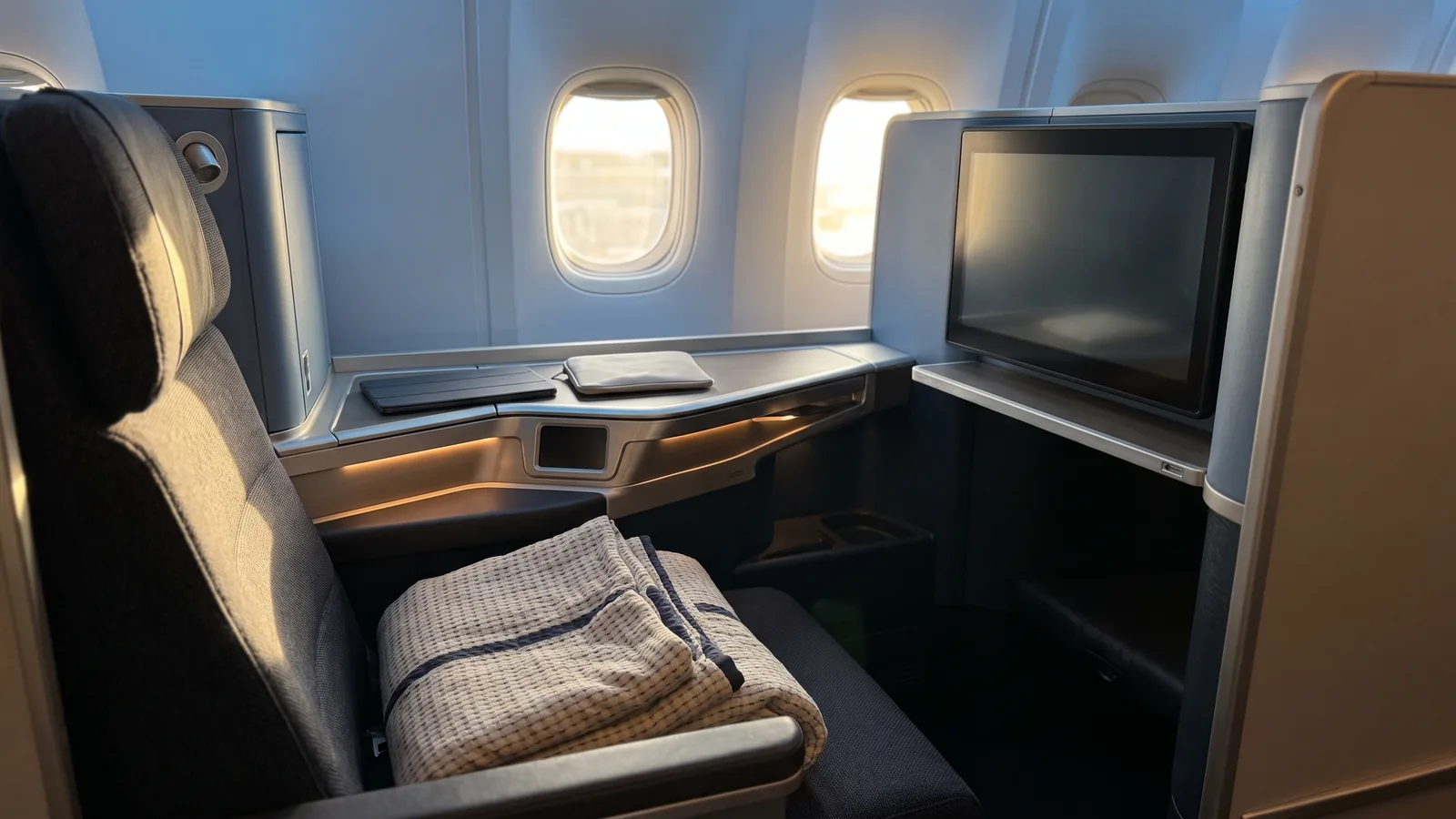 Illustrative image, AI-generated
At a glance#
| Question | Answer |
|---|---|
| Where award seats come from | a dedicated inventory bucket, not empty seats |
| Who controls it | the operating airline |
| Why programmes differ | partners receive a different slice |
| When space is released | usually at window opening and close to departure |
| What phantom space is | an entry with no bookable seat behind it |
| What you control | choice of programme, timing, splitting directions |
Why an empty seat is not an award seat#
Award seats do not come from leftovers. An airline runs several inventory buckets per flight, and one of them is the award bucket. How large it is gets decided by a revenue system based on expected demand, load and fare levels. The current seat map plays no part.
A half-empty aircraft can therefore offer zero award seats, and a well-booked one can release several. The seat map shows seats, the award search shows inventory, and the two have little to do with each other.
The mechanism is the same one that governs fare classes. Airlines sell a slot in a bucket with its own rules, its own price and its own availability, and awards are simply another bucket. Award availability is a revenue decision made by the operating airline, never an accident, and waiting for an empty seat means waiting for an event that has nothing to do with award inventory.
How inventory gets steered#
The operating airline decides#
Whoever flies the aircraft controls the bucket. That holds even when another programme bills the miles: a partner programme can book only what the operating airline releases, and it can neither widen nor bypass that release.
For searching, the question of the best programme therefore has two halves. The first is who opens the seat at all, the second is which programme prices it most cheaply. The two answers often differ, which makes searching several programmes the method itself.
Airlines also frequently release only the lowest award bucket to partners, while their own members can reach higher buckets too. Finding nothing in a partner programme does not prove that no seat exists.
Release happens in waves#
Most airlines open their booking window at a fixed lead time, and at that moment the award bucket is at its largest. A scarce destination in an expensive cabin is a search for day one.
The second wave arrives close to departure. What the airline has not sold by then is partly released as award space, because an empty seat earns nothing. That wave is less reliable, and it is the reason last-minute award bookings are sometimes surprisingly easy.
Between the two waves little happens, which is when most people search. Knowing the waves changes how search time is spent and saves weeks of looking without result.
Directions and segments are held separately#
Outbound and return have separate inventory, and so do connecting segments. A search for a complete round trip therefore requires every part to be available simultaneously, which is far less likely than a single hit.
Searching separately and assembling afterwards gets round it. Two one-way awards in two programmes are normal in award travel and often cheaper than a forced round trip, because each direction may have its own best programme.
Connections add a peculiarity that why award space disappears while you book covers in detail: some seats exist only inside a particular flight combination and never appear in a search for the single segment.
What search tools can and cannot do#
A market of award search tools has grown up, and their value is misjudged in both directions. Three groups are worth separating.
Inventory displays. They query the same interfaces a partner programme uses and show the answers together. Their value is coverage: one search across twenty programmes replaces twenty logins. They do not create seats that do not exist.
Alerts. They watch a route and report when space appears. That is the real gain, because release waves are unpredictable and nobody searches daily. For a scarce destination this saves weeks.
Routing calculators. They test which itineraries a programme allows as a single booking, covering detours, stopovers and open jaws. That is the part an airline’s own search mask rarely reveals.
No tool makes the decision. Whether a seat found is worth its price stays a calculation, and that calculation sits in what a point is worth. Paying for a subscription and then booking without doing the arithmetic automates the searching and leaves the decisions untouched.
How a systematic search runs#
A structured search takes twenty minutes and follows the same order regardless of destination.
First, identify the operator. Who flies the route, and in which cabin? That list produces the programmes able to see the seat at all, because only the operating airline releases it.
Second, find the cheapest billing programme. Every operator has its own programme and partner programmes. Finding the one that prices from a chart usually means finding the price, and charts are mostly public.
Third, check directions separately. Outbound first, then return, neither forced into a round trip. What fits gets combined at the end, across two programmes if necessary.
Fourth, count the co-payment. A low mileage price with high surcharges is often more expensive than a higher mileage price without them. The figure sits in the search mask and is routinely overlooked.
Fifth, move miles only then. The transfer comes last because it cannot be undone. What that order looks like in detail is set out in how a points transfer works.
Worked example: one aircraft, three programmes#
Take a flight operated by airline A. Programme A is its own, programmes B and C are partners in the same alliance, and all three can book the same seat on different terms.
| Programme A (operating) | Programme B (partner) | Programme C (partner) | |
|---|---|---|---|
| Visible award seats | 4 | 2 | 2 |
| Economy price | 34,000 dynamic | 25,000 from a chart | 30,000 from a chart |
| Co-payment | 60 USD | 210 USD | 75 USD |
| Changes | free of charge | for a fee | for a fee |
The figures are assumptions, but the pattern is the one that keeps recurring. The operating programme sees more seats, the partners price more cheaply, and the co-payment decides which offer comes out ahead. Programme B looks cheapest on miles and turns out dearest in cash; programme C, with a slightly higher mileage price and a modest co-payment, is the more balanced booking.
Searching only one programme shows one of those columns. No search habit is more expensive, and breaking it costs nothing but the reflex to look where the miles happen to sit.
Recognising phantom space#
Phantom space is an entry in a search with no bookable seat behind it. Three causes recur.
A stale intermediate layer. Partner programmes query inventory through interfaces and cache the answers. A seat taken minutes ago can still be listed.
Combination-dependent seats. Some inventory exists only as part of a specific itinerary. Searched individually it shows; booked individually it fails.
Misreported buckets. The award bucket is a booking class, and the message between systems can be wrong. The seat appears, the ticketing fails.
Phantom space gives itself away by appearing in the same search again and again without ever completing a booking, usually with a vague error. After the second failure a telephone call settles it faster than a third click.
When it is not worth searching further#
More searching is not worth the time in these situations:
- Fixed dates in peak season. Where neither date nor route can move, inventory decides, and in peak season it is usually closed.
- Short hauls with cheap cash fares. The mileage price follows the fare downwards and the co-payment eats the rest. Paying cash is almost always better here.
- Too few miles in the right programme. If the seat is reachable only through an irreversible transfer whose transit time exceeds the seat’s likely life, the search is producing a risk, not a booking.
- When the trip itself is uncertain. Award bookings are often more flexible than cash fares, but searching and booking cost time that is lost while plans are open.
- When the cabin is the goal in itself. Spending days to fill a cabin you would never have paid for in cash optimises a number, not a trip. Whether that pays is settled in what a point is worth.
Alliances and bilateral partnerships are not the same#
Two terms get mixed up constantly in award searching, and the difference decides where it is possible to search at all.
An alliance. A standing group of airlines with shared rules for status recognition and award bookings. Inside an alliance, booking a partner’s flight is the normal case and inventory is usually visible both ways.
A bilateral partnership. A contract between two airlines outside any alliance. It is often more generous, being negotiated case by case, and harder to find, because no alliance list carries it.
The distinction adds a question to the search: which programmes hold a contract with the operator even without a shared alliance? Those are the cases where an inconspicuous programme prices an expensive cabin at a level the alliance partners do not offer.
The most common mistakes#
- Using the seat map as the yardstick. Empty seats and award inventory are two different things, and only the second can be booked with miles.
- Searching only your own programme. Partners see different seats and price them differently, so a single search shows half the picture.
- Searching the round trip as one unit. Each direction has its own inventory; searched separately and assembled, the hit rate rises sharply.
- Looking at the co-payment last. On partner bookings it frequently decides the best option, and it is visible before booking.
- Clicking on after the first phantom seat. The same failure twice is a case for the telephone.
- Searching between the release waves. Window opening and the weeks close to departure repay the time far better.
A note on holds and telephone agents#
Two practices survive from an older era and still solve problems no website solves.
The hold. Several programmes will keep an award seat for a short period, often only by telephone and sometimes for a fee. Where it exists, it is the one clean way to wait out a transfer whose transit time would otherwise cost the seat.
The agent search. Agents can see combinations a search mask will not assemble, above all mixed-carrier itineraries and open-jaw routings. Some programmes charge a fee for booking by telephone and waive it where the website cannot complete the booking.
Neither practice creates inventory. Both turn inventory that already exists into a booking, the step that fails most often.
Related topics#
Frequently asked questions
Why does an airline show no award seats when the flight is not full?
Why does a partner programme see different seats?
What is phantom award space?
When is award space released?
Is a paid search tool worth it?
Can I hold award space for later?
Why does a seat vanish mid-booking?
Does the airline's own search always show everything?
Does elite status help with availability?
Why can I not find the outbound and return together?
How far ahead should I search?
Sources
Which flights are really in your spending?
In a free strategy call, we translate your spending into your actual routes and travel dates. Want to see the number first? The calculator shows it in about 30 seconds.
30 minutes · online · no obligation
What we'll cover in the call
- Which airline programs fit our routes?
- How many flights are realistic for our spending?
- What do taxes and fees cost on award flights?